Egg Donation, Round Two: Becoming a better advocate for myself

1 Mar

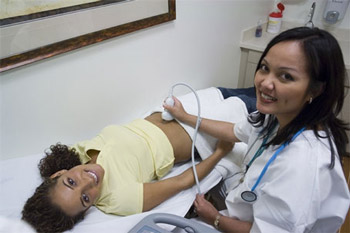
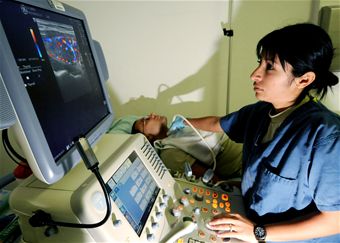
Egg donation number two was FAR less fun than egg donation number one, if “fun” is even an appropriate word to use here. My body responded a bajillion times better to the hormones (though my mind did not, and I’ll get there), and I developed eggs much faster that were larger (more inconsistent in size), but nearly all were considered large enough for use.

This meant that my largest egg in my right ovary was .3mm, sharing space with 12 other eggs, all hovering around or above .2mm. My left ovary was more reasonable in size, though not in number. There were 15 eggs and they ranged in size from .14mm-.21mm. A total of 28 eggs were produced between the two, taking up nearly 5mm of ovary space… considering that the normal ovulation cycle produces 1 ovum to ovulate at an average of .2mm… it sucked. Like more than I could have ever anticipated. I was bloated to the point of looking pregnant (5 months pregnant, according to my formerly pregnant – now mothers – friends), and I could not do normal activities. Even walking was just terrible. And, this was right before Christmas, so much celebrating and being around people was inevitable.

Boy, was I miserable to be around. Just ask my boyfriend. He thought I was going to break up with him, and to be frank, so did I. Everything he did was annoying to me, not just because I was in pain (and I was in pain nearly constantly for the last week of shots), but because it seemed that my patience had been reduced to nothing for whatever reason. Poor kid. I still feel bad about how I treated him during that time.

Anyway, how does this relate to advocating for myself? So, like the 5th day of shots, I asked the doctor if it was normal to begin feeling my ovaries inside my body, because it had taken at least 2 days longer for me to notice them the first time. They assured me that this was fine. But like 3 days later, they had begun to hurt enough to interfere with my life. I SHOULD have asked for more frequent ultrasounds, and I should have advocated for having my surgery a day earlier than I had it. I literally felt like my ovary was going to burst, which is not a cool feeling. I should have told them I wanted an ultrasound every day after that 5th day… but I didn’t, and I paid the price. My recovery was much longer this time (10 days as opposed to 7), and overall it was just a miserable experience.

IF I choose to donate again (a big “if” at the moment), I will not allow my doctors to ignore unusual and more dramatic pain. I will not allow them to keep me to a schedule that puts me at greater risk with an enlarged organ. And I will ask more questions than ever before.

Supporting more trans stories: reflections on our healthcare system and the media

28 Feb

A guest post by Lauren Herold and Tobias Rodriguez.

Earlier this week, an Indiegogo campaign went viral: Emerson College’s Phi Alpha Tau fraternity raised money for their frat brother, Donnie Collins, a trans man who needs top surgery. Donnie initially tried to pay for the surgery through Emerson’s insurance, Aetna, since Aetna offers coverage for trans*-related surgeries and hormone replacement therapy; Donnie’s request was denied, however, because Emerson College did not opt in to those services. After Out.com  featured an article about Phi Alpha Tau’s Indiegogo campaign, the brothers raised more than twice the $8,000 Donnie needs for the surgery.

Donnie’s frat brothers spoke in their Indiegogo video about wanting this fundraiser to start a conversation. There are (at least) two important conversations we’d like to address.

First, not every insurance company covers trans-related services. Colleges are typically hesitant to add these services for financial reasons. When colleges opt in to services for insurance plans they offer to students, they want to ensure they are getting their money’s worth. If a college doesn’t have any trans students, they can claim that these additional services will be paid for by all but enjoyed by few. Their most obvious incentive to add the services is to attract a more diverse student population, but the chances of the college attracting even dozens of trans students who need these services is slim.

It’s good that insurance companies like Aetna are beginning to cover these services, and many colleges are beginning to follow suit by opting into these services. But “many” is not enough. People like Donnie oftentimes don’t have time to wait for their insurance plan to decide to cover necessary services. Raising funds for an individual’s surgery may be successful in the short term, but we shouldn’t have to settle for hoping that the kindness of strangers will make up for the shortcomings of insurance companies and their clients. We need to push for institutional change so that all policies include these services. There are trans people around the country with similar medical needs who spend years saving or raising funds for these procedures and sometimes do not succeed. What about them?

We also need to talk about media coverage around the Indiegogo campaign. Most reporters have focused on a hook: that fraternity members defied the frat bro archetype by launching a campaign in support of a trans member. Donnie’s frat brothers deserve a lot of credit for demonstrating what it means to be a trans ally. But when media coverage focuses on the actions of cisgender individuals, it moves focus away from the fact that lack of proper medical care for trans people is a systemic issue and shifts our gaze to the stories of cis allies. The frat brothers are the conversation piece: they both created the conversation and are the subject of it, while Donnie’s experiences are discussed only briefly. Who gets to talk about trans people’s bodies and experiences? Cis people create the storyline and drive the narrative, and articles about the Indiegogo campaign reaffirm this trope.

This pattern perpetuates the assumption that cis people can talk about trans people’s bodies and experiences without their consent and without repercussions. In this case, Donnie welcomed the Indiegogo campaign as another platform he can use to share his experiences with the world, and has already made a variety of YouTube videos documenting his transition. However, for many trans people, their transition is a private journey. Stories like these make invisible the trans people who don’t medically transition as well as those who don’t want their transition to be public knowledge.

These stories also reify a singular trans narrative: that every trans person comes out, is supported, and begins a medical transition that includes hormone replacement therapy and at least one surgery. This is the story most people are comfortable hearing, but it does not reflect all trans people’s experiences and it alienates trans people whose experiences differ. It leaves out trans people who do not medically transition (whether because of personal preference or lack of access), who do not have a support system, and/or who are not vocal about their trans status.

We applaud the efforts of Donnie’s brothers–their campaign has helped change his life, and will continue to benefit trans people: they have pledged to donate the extra money they raised to the Jim Collins Foundation. Yet these efforts are not enough. We have to work toward systemic change in our healthcare system so trans people are not constantly fighting individual battles. And when we tell trans stories, we need to do so with a media that captures the full complexity of trans experiences.

*We use the asterisk here to suggest that the term “trans” can refer to a lot of identities under the trans umbrella. Here’s a great explanation of why. Our choice to use the asterisk in our first use of trans* and not thereafter was for readability.

MAKERS and Beyond: The History and Future of Feminism

27 Feb

Last night, PBS aired MAKERS: How Women Made America, a three-hour look at the history and evolution of the women’s movement in the United States. If you missed it, the whole thing can be viewed online.

It’s difficult to distill 50 years of diverse, rapidly evolving, and (necessarily and often productively) contradictory feminist history, work and ideas into a documentary format at all, even if given an almost unprecedented amount of airtime to do it in. It’s important to note, right off the bat, that MAKERS relied heavily on stories told by and about the women whose identities and concerns — white, cisgender, documented, and able-bodied — have and continue to be privileged by mainstream feminism. While the film featured noted women of color and queer identified activists, their role was mostly presented as “challengers” to racism and homophobia within the mainstream feminist movement, rather than as an integral part of building that movement, now and then, to serve more people better. And it is outright shameful that MAKERS eliminated trans* folks from the history of feminism, especially since the movement and some its leaders both borrowed from trans* women’s organizing in their tactics while at the same time tearing down those women and their organizing.

But here is why I am grateful that MAKERS exists, not as the definitive version of feminist history but as a first step toward reappearing women into mainstream history: the film was, without a doubt, a more comprehensive and thoughtful look at the history of the women’s liberation movement than most US students ever learn in school — and now it exists as a resource to be used by educators who’ve either been unable to use existing resources (“too radical” or “not approved”) or simply did not know about them. There is a tremendous opportunity for the film to be paired with additional resources in classroom settings at all levels that expands upon the content in the film and introduces some of the work and leaders who were not featured on the screen.

I’m also pleased with how MAKERS contextualized the work of the women’s movement specifically as organizing. One of the most annoying forms of backlash is the myth that the feminist movement consisted of a bunch of women getting ragey and their collective rage just magically changed the world. Yes, women got ragey en masse, but many of those enraged women were organizers, coming out of the labor, civil rights, trans and queer liberation movements and there was (lots of) strategy that led to the changes, alongside raw emotion. It’s important for younger feminists to see that we are part of a long line of strategists who were also figuring out when to act, when to hold your fire, how to deal with the media narrative, and how to most effectively message the work.

The most disappointing part of MAKERS, to me, was, well…me. The final hour focused on the younger waves of feminism and its tone was epitomized by anti-labor leader Michelle Rhee speaking about her desire to cook and do laundry as an example of how younger women don’t believe they need feminism anymore. I was the sole “young feminist” — as in, under 35 — featured in the broadcast and my one line was about not caring if young people call themselves “feminists” or “turtles” as long as they are doing pro-equality work, which we are. The segment also featured Letty Pogrebin providing the tired “if they lose their rights, then they will wake up” warning about and to younger women.

First, I’m not the face of young feminism. Not that there can be one, or that one representative of a movement is ever an effective strategy, but literally, I — a white, cisgender, middle class, documented, able-bodied, educated woman living in New York — am not representative of the wonderful, broad, diverse and complicated movement of my generation that I call the Forth Wave. The younger feminist movement that I know and love is being led by radical women of color, indigenous, queer, and trans* folks of all genders, in all parts of the world and we must insist that these leaders, not those that look like me and have my privilege set, are centered in conversations about the current state of and future of feminism.

Secondly, my praise of the film’s coverage focus on the organizing of the 2nd Wave is what was missing from its look at young feminism. As Jill Filipovic points out at The Guardian, there is an entire generation, ours, that’s been radicalized, working, and movement building online. Blogs and social media are our consciousness raising groups and the spaces in which we are hashing out the diverse ideologies and strategies we use to win gender justice. But to focus solely on the online aspect of young feminism misses the other radical work that’s being done, like abortion funds run by young feminists literally fulfilling Roe’s promise of the right to abortion with access to it, and young people using their bodies to shield patients from anti-abortion protesters as clinic escorts.

Yet, for all its flaws, I liked MAKERS because for the first time I was watching a historical film in a mainstream space and thinking, “THIS. This is my history. This is my legacy, my work, and my responsibility.” It was an “I’m not alone!” moment comparable to when I discovered feminism and that’s the reaction of a women’s history nerd who honestly didn’t learn much new history — I can only imagine what it meant and might mean to people who don’t know most of that history at all.

I’m also comfortable supporting MAKERS because it’s not the end, but the beginning. The press, viewership and online conversation around the premiere demonstrated a hunger for more explorations of women’s history and a mainstream audience for them. In light of this, we should and must push for more historical women’s programming that centers the stories marginalized, minimized, and erased in this one.

We must also, as young feminists, start intentionally recording the history of our own work as history. It took 50 years to get this one made and a lot of what influenced this movie is who is still around to tell the story and who has enough power and privilege to decide what matters and how much time it gets. I’d like to see my generation not make that mistake. As a start, Steph Herold and I co-founded the Feminists of Generation Now pinterest board to highlight the broad scope of organizing being done by young feminists. I’ve already seen and taken part in conversations since the film aired last night about films, books, and shows focused on and led by the Forth Wave and I can’t wait to see where those projects go.

If the measure of a successful television is viewers asking, at the end, “what’s next?’ then MAKERS was a success. And it’s the young feminists who are here, angry, and organizing that are living out the answer.

Dealing with the Tragedy and Trauma of Loss in a Reproductive Justice Context

25 Feb

When the first rumors began to spread about a woman who had died following an abortion performed by Dr. Leroy Carhart, one of the last doctors in the country willing to perform third trimester abortions, the Gang gathered around our proverbial fireplace to talk it out.

Our first reactions were, as always, a enormous outpouring of empathy for the woman and her family – not just for the loss of her life, but for the invasion of their privacy and lack of space to grieve that would now be inevitable. This was accompanied by a sinking feeling of dread at all that we knew would now happen. There would be the aforementioned invasion of privacy by anti-choicers. There would be loud insistence that they had been right all along, that abortion is inherently unsafe, even though the exact opposite is true - women are 14 times more likely to die from complications of childbirth than from abortion.* Anti-choicers would use this to attack pro-choice work, insisting that we don’t care about women and babies, and we’re all essentially murderers. Meanwhile, we’re grieving for the loss of one of our own, and worrying about the future of one of the few doctors left in the country who unequivocally supports the right to choose at the cost of his own privacy and safety. We also discussed the fact that for at least a week or two, all information would be a rumor, the loudest and sometimes the only voices would be anti-choice, and we would need to wait for real information, out of respect for the woman and her family, before we could talk about the case.

It went down just like we thought it would.

Anti-choicers, with no information about what had actually happened to the woman who had been Dr. Carhart’s patient, immediately began harassing out pro-choice advocates online, including, among a bunch of other crap, this early tweet to our editor. We advised everyone to use the “block” function liberally. Then the Washington Post reported that anti-choicers had illegally invaded the woman and her family’s privacy by first obtaining (ILLEGAL) and then publicly broadcasting (FUCKING ILLEGAL) her medical records from the hospital. And throughout this, of course, there were a million articles and blog posts on anti-choice newsfeeds and websites nearly rejoicing in this woman’s death, since they were sure it meant a huge political win. That kind of thing is really hard to take, although it lead to some good conversations about how tragedy and death are politicized in all social movements, and in what ways that is effective and respectful or disrespectful depending on the circumstances.

It has now become clear that the woman died of rare complications that can occur after vaginal birth, c-section, or abortion. There is no way to tell if a woman will experience these complications.One source in the article describes it as the obstetric equivalent of being hit by lightning. All appearances, including a gift registry, suggest that this was a wanted child and that health complications for either the mother or the fetus required the third-trimester procedure.

It’s disheartening that we knew exactly the way this story would unfold, but it demonstrated to me that we have solid, responsible coping mechanisms in place. Here are what we can offer as some best practices for dealing with a tragedy like this:

1) Don’t believe the hype. Don’t believe anything you’ve heard until reputable, mainstream news sources are releasing reliably sourced information. In the beginning, while we do our job of hanging back respectfully and waiting, anti-choicers will be gearing up a political campaign of epic proportions. They love this shit. At this moment, they’re like dogs after the juiciest bone of their lives. They are not going to wait to discern what’s true. While it’s painful, let them do their thing. Don’t respond on social media, don’t make a statement. Remember that while we as out pro-choice activists are targeted by these people and hear their messages all the time, most of the world is totally unaware that they exist. Practice self-care and respect for the human lives involved by not engaging until you have more information.

2) Allow yourself to grieve in complicated ways. You are allowed to grieve for the loss of a community member while also feeling fear for the medical professionals involved. You are allowed to acknowledge the reality that anti-choicers will attempt to exploit a woman’s death for political gain, and you are allowed to feel dread. It is extremely unfortunate we couldn’t mourn in a straightforward manner, but knowing that the consequences of the tragedy will be complicated and political and not looking forward to that at all does not make you less compassionate or less aware that a real human life has been lost and that is awful.

3) Do not engage. Do not engage. Do not engage. You’re not dealing with rational people, and yes, as an out pro-choice activist, they do want to hurt you. You’re not required to get involved, and as much as you want to yell, you don’t have all the information yet, and you need to remember that they don’t either – see #1.

4) Seriously engage with the real issues. Once you know what the real issues involved in the case are, consider them. In this case, the real issue is that a woman experienced an extremely rare complication; it has nothing to do with abortion one way or another. But it’s also the case that a woman who wanted to keep her pregnancy found out very late that it wasn’t viable and required a third-trimester abortion, which is illegal in almost every state. She was lucky to find a doctor who would perform the procedure, and that doctor is under constant attack, a fact which this incident only serves to highlight. There may come a time in the next few years where someone with an unviable pregnancy has literally no options. Let’s talk about that.

_______________________________

*This should be a sign that our maternal care is fucking abysmal and in a comprehensive reproductive justice framework we should really try to do something about that. However, that being said, pregnancy itself is a project that takes a significant toll on the body and, even under optimal circumstances (which the US does not offer, especially for poor people and people of color), poses inevitable risk. Being pregnant is and will always be riskier for someone’s health than an abortion. So bless all of you willingly and happily bringing bright and beautiful children into this world, cause it is no easy thing.

Pregnant and I do not want to be

12 Feb

A guest post by a writer who wishes to remain anonymous

When the plus sign came up I just stared, not surprised, not not surprised, just that groggy7:48 am feeling of “oh.” I threw the test away. Then I picked it up out of the trash and behind my mirror in the cabinet. Looked at myself dead in the face and walked to kiss my Father Good Morning (I live at home).

Is it a Good Morning? He got ready and I lifted my shirt up in the mirror to see my belly. Touch it. I’m pregnant. Really dark blue plus sign pregnant. Which, you know, I suppose I was expecting (no pun intended) because I went so far as to piss on a pregnancy test.

Yesterday, I reached for a jar in a friend’s kitchen and when I brought down my arm I almost screamed in pain. My upper arm lightly pressed the outside of my breast and, bam, agony. Fuck, I thought, I’m pregnant. And then went on cooking because I’ve heard its best to piss on the stick in the morning. Really, that’s how my mind works: You’re pregnant, for sure, you’re pissing on a stick in the morning, could you please pass the salt.

I don’t know who created this mass of cells with me. I’ll know between 3:40 and 4:40 pm this afternoon when an ultrasound tells the gestation. I had sex twice in January, with two different people, and for the first (and second) time in over six months.

I am getting an abortion. There’s no two ways to Sunday on that one. I have an appointment today to confirm that I am eligible for a medical abortion. I will know the father and the day I am extracting it from my body. Father? Am I a mother now?

I don’t know. I also don’t know who to tell. If it’s the second man, I will tell him. I don’t know how to contact the first. And other than potentially one persona, I don’t have anyone. My family and my best friends, mentors, and former coworkers, would probably all know what to say, but I don’t want to hear any one close to me’s opinions or point of views. I don’t want to be able to hear any one else’s voice in my mind other than my own right now. At least until I know more.

Can We Get Some #RealTalk on Pregnancy?

6 Feb

We don’t just consume media every minute of every day, we are force-fed media. Media is unavoidable. It’s on the computer, where many of us do a lot of work. It’s on the TV, where we sometimes go to relax. Here in NYC, it’s on every single street. You can’t leave your apartment without being assaulted by socializing images and ideas. So until I was 23 and my best friend had a baby, almost everything I knew about pregnancy came from media – television shows, movies, and magazines. I could hardly remember my mother’s two pregnancies after my birth, so I didn’t have much, as it were, up-close-and-personal experience.

But even if I did, it wouldn’t have mattered, because here’s the thing about pregnancy: everyone lies about it.

Lies! So many lies. And so much lying by omission; so much just not-telling about the truth of pregnancy. Media has a nicely packaged version of pregnancy that is meant to make it look difficult, but funny, and ultimately completely worthwhile. This is understandable, since most media is run by people who can never, ever actually get pregnant. I have a theory about the lying and lying-by-omission done by people who have understand pregnancy on more intimate terms, too. I think that people who know the truth about pregnancy lie about it because if we knew the truth about pregnancy, almost no one would ever consent to being pregnant.

I always thought there was a secret mommy-club I wasn’t part of, where women (in the time and place where I grew up, pregnancy, parenting, and everything else were highly gendered) sat around in little sewing-type circles, drinking tea and lightly sharing what I viewed as some of the most mysterious secrets of the universe. And I was right. There is a secret mommy club. When my first close friend got pregnant, I was inducted as an honorary member and given a special pass, which I still keep on a lanyard for when I need it. The mommy club pulled back the curtain for me, and what I saw behind it scared the ever-loving shit out of me.

I have been exposed to more images of fake baby-bumps that I have been exposed to actual people’s real, pregnant bodies. As a result, I thought pregnant bodies had sort of big, round, firm bellies, like a safe case for the baby – like a guitar in a guitar case. THIS IS NOT TRUE. A pregnant belly is a lot more like a sac that an alien is growing in, and it’s freaky. Babies move in-utero and sit on your spine, on your vital organs – one friend, while in-utero, sent her mother to bed for several months because she just loved to lie on a major artery and she CUT OFF HER MOTHER’S BLOOD SUPPLY. Once, my friend’s baby reached it’s little hand out, from the womb, to high-five me. I could see a hand trying to reach through my friend’s stomach, from the inside. Guys, pregnancy is horror-movie-level WEIRD, and that is no joke.

Morning sickness? That ain’t some cute shit you see in the movies where you throw up once or twice and then the truth slowly dawns all over your face and then you run to the drug store, pick up a test, and flash-cut to you sitting on a toilet holding a stick with a plus sign and then it fades away so you can hurry up to the setting-up-the-crib montage. Morning sickness often doesn’t fade away. Morning sickness is crippling. For some pregnant people, morning sickness is code for “7 months of constantly having the flu, running a slight fever, vomiting several times a day.” You should read the whole post I just linked to. It’s by a young woman who’s pregnant and it mostly details sitting on or near the toilet literally all day, every day.

My friend is breastfeeding. Her hair is falling out. Her dentist told her she’s losing so much calcium to the adorable, beloved parasite (this is the cutest parasite in history, you have no idea) that she may need dental surgery.

Mood swings? Hollywood loves to make mood swings the funny center of a relationship up-and-down that starts with yelling and ends with The Woman sitting on the couch, crying, admitting that she feels fat and powerless, and The Man sitting down, the weight of everything she’s doing for him suddenly settling upon him, vowing to do better, Exeunt Stage Right, Consumed By Bliss. Except that mood swings for several of my friends more closely resembled crippling depression. They were unable to get out of bed. They felt powerless because pregnancy had actually rendered them powerless; they couldn’t go to work, or go to the grocery store, or do really fucking basic things for themselves, and it felt awful. And their partners felt despair, because they too were powerless, because they could go to the grocery store and pick up flowers and say nice things but they couldn’t make it better.

There came a time in my life where people started being honest about pregnancy and I started listening, but many people I know got pregnant before anyone had explained to them seriously what being pregnant might mean. When I describe immobility, helplessness, depression, severe physical discomfort, daily vomiting, and hair loss, I am not describing pregnancy worst-case-scenarios: I am describing common side effects of pregnancy.

And that’s just pregnancy. That’s not even getting in to childbirth itself. Do you know what a vaginal tear is? If you think you may ever give birth, it’s a fairly common phenomenon you may want to familiarize yourself with.

I may get pregnant someday; I may decide to have kids someday. But in the meantime, I interrogate pregnant friends and family members, in their most vulnerable, defenseless, pregnant state, like it’s my job. If I am ever going to do this thing, I want to know, as much as I possibly ever can, exactly what I have gone and gotten myself into. And I want my partner to know as well. I want both of us to be aware of what carrying a child will mean for my body, and what those changes, and frankly, that damage, will mean for our life together. I want a shared honesty about what could essentially be termed a temporary insanity brought on pregnancy and what that would mean for our home.

I see The Truth About Pregnancy being shared more and more, but still mostly in female-dominated spaces, like “mommy blogs” and Pinterest. I’d love to see young people move towards a complete honesty of what this experience means to them, or meant for them, and what elements of that experience seem unique or commonly shared.

In other words, “Sit down, honey. We need to talk about vaginal tears.”

What do polls about abortion really tell us?

5 Feb

Wall Street Journal: 7 in 10 Americans support Roe v. Wade.
Gallup: Americans favor legal abortion, they don’t overwhelming support abortion after the first trimester.
Pew: Most millennials don’t know that Roe is about abortion, but favor the decision once they’re told what it’s about.

How do we make sense of this data? What do these polls actually mean for the pro-choice and reproductive justice movements?

Interpreting polls is not easy. We can dissect each and every poll, hoping it will get to the truth of our nation’s beliefs about abortion, but in reality, these polls are brief snapshots–they tell us part of the story, but not the whole story. The many barriers to abortion access that we fight on a daily basis–from waiting periods to forced ultrasounds to the Hyde Amendment–are the result of coordinated, well-funded anti-abortion campaigns at the national and state level. If we think about social change as happening only in legislatures, then I can see why so many people are so pessimistic  about the future of abortion rights and access in the United States. While it may look bleak from a purely legislative standpoint, I think there’s actually much to be hopeful about.

Instead of looking at our movement as scrambling to catch up to the anti-abortion movement, I would like to see us shift gears and see how abundant our resources are, and figure out how to use them to our greatest potential. We have at least a dozen well-established, well-funded national organization that a majority of the American public supports. Many of these organizations have affiliates with local activists in every state. There are dozens and dozens of smaller organizations such as COLORNational Advocates for Pregnant WomenSpark Reproductive Justice NOW,  and the Native Youth Sexual Health Network, working to fight for the reproductive rights of all people, not the privileged few, and encouraging our legacy pro-choice organizations to consider the reproductive justice framework. There is a growing and vocal movement of activists, many under 40, who work outside the traditional pro-choice movement power structure and are also urging our legacy organizations to be bolder in their visions. It is limiting and shortsighted to look only at our problems; it’s also not a very good recruitment strategy. Who wants to be a part of a movement that appears to be in constant crisis?

In addition of naming all the struggles we are facing (and there are many), what if we also thought about our potential? Fighting anti-abortion bills in state and national legislatures is not enough. Are we a political movement only? Or are we also a movement for social and cultural change?

Some people are inspired by phrases like “the war on women”—it galvanizes them to participate in the struggle. Others find that kind of language exhausting and exclusive. How many times can you read the headline, “this is the WORST attack we’ve seen” without getting compassion fatigue?  In addition to taking stock of what’s going wrong, what if we also provided support and opportunities for people to re-engage with activism on their own terms? I’m thinking specifically of a new initiative called CoreAlign, which is providing people with a space to discuss the tough questions faced by the pro-choice and reproductive justice movements: Do we want the government in or out? How do we talk about gender in our movement? What kind of abortion stories do we tell to advance our goals? Evaluating where our movement’s been and where it’s going can only make us stronger. And we’ll need a strong movement to fight the legislative hurdles we’re facing.

Engaging in these exploratory, movement-focused questions is often seen as  competing with our legislative work. We can’t function on this binary. We must set gears in motion for both political and cultural change and engage everyone in the process–grassroots activists, abortion fund volunteers, people with mixed feelings about abortion, people who have and haven’t had abortions, political organizers of all stripes. Leadership requires us to go beyond public opinion polls and lead people to where we want them to be. The anti-abortion movement has been doing this for decades. It’s time we stepped up to the plate.

Catholic Hospital Argues Fetuses Are Not Persons

4 Feb

On January 25, 2013, anti-choicers from across the country gathered to march on Washington DC, in a show of their support for fetal life. This year, I’d almost forgotten about the March for Life- mostly because the event is a ton of high schoolers who are bused in to increase numbers. It’s a way for teenagers to travel, have time off from school, and hang with their friends- and sometimes they even get a little extra credit for going. So I’m not really worried about hundreds of kids taking a vacation (although you should listen to @ClinicEscort talk to a train full of them about her abortion experience here).

What reminded me that the March of Life was happening soon, was an article posted on January 23 on a Colorado news website titled “In malpractice case, Catholic hospital argues fetuses aren’t people.

What?

Here’s a summary of what happened: in 2006, a woman who was 7 months pregnant with twins arrived at the hospital short of breath and vomiting. She passed out, and had a massive heart attack because of a clog in her artery. The doctor on call never showed up that night, the woman died less than an hour after entering the hospital, and the twins died in the womb. A terribly heartbreaking situation. The  husband is filing a wrongful-death lawsuit for the twins–he realized that his wife was beyond saving, but argues that the doctor should have arrived to perform a cesarean and saved the twins.

The Catholic hospital’s lawyers countered that fetuses aren’t people, and therefore the husband cannot file a wrongful-death suit for them.

What?

If you ever want to know if someone REALLY believes what they are saying, pin it against money, apparently. The hospital has twice–before a court, and an appeals court–argued that persons are born, and therefore the viable, 7 month gestation fetuses are not persons. Once again: the lawyers for a Catholic hospital which has a mission stating, “Catholic health care ministry witnesses to the sanctity of life ‘from the moment of conception until death,’” have said,

…the court “should not overturn the long-standing rule in Colorado that the term ‘person,’ as is used in the Wrongful Death Act, encompasses only individuals born alive. Colorado state courts define ‘person’ under the Act to include only those born alive. Therefore Plaintiffs cannot maintain wrongful death claims based on two unborn fetuses.”

Now, there is a very important point here I’d like to make- if the Catholic lawyers had argued the other way, things could have been very different. If they had agreed that the twin fetuses could have a wrongful-death lawsuit filed for them, and that the Catholic hospitals recognized their personhood, they could have had the beginnings of legal precedent for recognizing fetuses as persons. Of course, many hospitals and laws already recognize the value of a viable fetus to a family, and this case couldn’t have banned abortion overnight. But they didn’t choose to do that- for this Catholic hospital, it seems that money is more important than fetal life.

I probably sound like I’m repeating myself a lot, but this is a big deal. If a Catholic hospital will argue in a court of law that fetuses aren’t persons, then perhaps we shouldn’t respect their argument when it’s based upon the concept that fetuses are persons (which is quite often). If they really, truly believed and supported their position, they wouldn’t argue against it. If even Catholic hospitals following the rules of the US Catholic Bishops (some of the biggest fighters against abortion) don’t believe their ideas, why should we consider laws they try to pass? Or let them have ways to opt out of the birth control mandate?

I don’t think we should. Of course, these types of things aren’t decisions I get to make personally. But I can remember these facts about antichoicers while I am having discussions with them: that anti-choice people get abortions too; that more people are calling themselves pro-life, but support for legal abortion has not decreased; that Catholic hospitals don’t always follow the idea that life begins at conception. Some people are incredibly sure of themselves, until they face a trial of their beliefs. My goal is not to change minds overnight, or push people further into their beliefs, but to open their mind to the vast possibilities around them. Sharing this story about a Catholic hospital denying the personhood of fetuses is one way to show the world is not completely black and white for anyone, but a huge ball of gray.

How having an abortion made me a better parent

30 Jan

What makes a person a good parent? I don’t know the answer for everyone, but for me, it means that I’m committed to teaching my son how to be non-judgmental, confident, and caring. It also means teaching my son the importance of education for himself and for all people, to talk about human rights, and to emphasize that he should always try to be open to new ideas and to spot and challenge certain forms of group thinking.

If I had another baby screaming at night, the creeping feeling of utter aloneness would be worse than I have ever experienced–I can almost assure anyone that. To raise another human being, alone, would not be a confidence building feat in myself, and thus I know with utter certainty that instilling confidence in my son would be difficult.

To have another child would be to fail at giving all that I can to my existing son.

When my son was 3 years old, I was newly divorced having finally escaped an abusive relationship. I was depressed, broken, and very lacking in any sense of self. Who I was and what I wanted from life seemed foreign. I was floating around like a ghost in my father’s house, too angry to talk to anyone without yelling, and barely able to make it up each morning to get into work. I had dropped out of college, and I felt like nothing but the biggest failure ever. This time of my life still haunts me for a number of reasons, not the least of which being how emotionally closed off I was to the people rooting for me: my son, and those closest to me in my family.

I went out a lot, drank too much, and although those things aren’t inherently wrong or bad, the alcohol made me especially careless with sex partners. It was as if I cared so little for myself that making my partner wear a condom during sex didn’t really matter.

One afternoon, I was sitting at my desk in the cramped and lifeless cubicle that I used to joke was “as barren and lifeless as my soul,” when suddenly I felt the urge to eat. So I grabbed a bite of my half eaten Subway sandwich, chewed, and promptly bent over the trash to throw it all up. I went home sick, not because I felt physically ill, but because I knew now what I had been trying to deny: I was pregnant.

I didn’t even take a pregnancy test for another week because I wouldn’t get paid until then and no, I didn’t have a dollar to buy one from the Dollar Tree. I was that broke, and had just emptied my change jar into my gas tank and purchased a few kitchen staples so my son wouldn’t starve. When I finally did take that pregnancy test, it was positive immediately, as I knew it would be. I wasn’t upset, or shocked, or any other emotion beside absolutely terrified.

I could not be pregnant, I did not want to be pregnant, I felt to be pregnant would be like dying for nine months.

After consulting with a doctor, who confirmed with another pregnancy test that I was in fact pregnant, she told me “you have some options, “ and I replied, “ when can I schedule a termination?”

She said quietly, “ you need to wait to schedule with us for at least twenty four hours.”

My mind screamed and my eyes dried up because I wouldn’t cry in front of her and have her think this was a tough decision. I wanted to say, “lady, I have been here before, literally and figuratively, and I know in the deepest depths of my soul what I am going to do, so get the appointment book and write!”

I thanked her and walked out alone, sat in my car, slumped, before I called my boss and said,

“I’m pregnant, can you see which days are going to work for me to take off so I can get an abortion?”

Boss: “Oh my gosh, are you okay? Sophia, why didn’t you use a condom!?”

“Because, I don’t know, but I know I’m not going to be pregnant so which days work for the department for me to be out. One day off should be fine, I just don’t want to schedule for a day that ya’ll need me to be there.”

Boss: “we’re in the middle of open enrollment. Um, I’m leaving on Friday for some broker meetings, so try if you can to schedule a few weeks out. Just one day , though? Is that enough?”

“Yeah, should be, I don’t really know though. I’ll fill out a request for time off, I’m just going to put medical leave as the reason.”

Boss: “okay, good luck.”

She was a wonderful boss, and I stay in contact with her still, years after leaving that god-awful place. We were always close and she shared my pro-choice sentiments. I always told her , as she told me, that an unplanned pregnancy would be terminated, that I just couldn’t emotionally, physically, or financially care for another pregnancy or human being. I called her then because she was the only one available in that moment that I knew would listen to me and be at least a little supportive.

Although she is my friend, her response was very much a boss-like reaction. I was needed at work to cover for her absence and do my work on time for our clients, and any absence would be troublesome. Hence her suggestion that I schedule things a few weeks out. This is typical and most certainly a barrier for many people seeking to make time to have an abortion.

Because I did not want to wait 24 hours to schedule an appointment, I called around to the many Portland-area clinics that perform abortions and asked for openings and pricing. The consensus was that an abortion without anesthesia would be about $300 cheaper, and the abortion pill being approximately the same price as non-anesthetic D & C.

I had heard from a family member that the abortion pill was awful for her, so I scheduled an appointment for the non-anesthetic procedure 2 weeks out, the same day I would be getting paid. The entire check did not cover the almost $500 cost, so I sold some clothes and purses to Buffalo Exchange to just barely meet the cost. I knew that I wouldn’t be paying my bills that month and that I would probably have to ask my dad for some money, but I didn’t care. I was relieved to have the appointment scheduled and was finally able to get some rest.

I have written before about the procedure itself, so I won’t rehash that in full detail. It was painful, and a bit awkward as the doctor talked openly about miscellaneous topics, but it was no where near as traumatic or as painful as childbirth. The antibiotics and pain meds they gave me put me to sleep quickly and I had my dad pick up my son from pre-school. I told him that day that I had a kidney infection (I have suffered from those periodically throughout my life) and locked myself in my room. When I woke the next day I called sick into work, eliciting a big sigh from my boss and serious guilt on my part, but I just wanted to rest and sleep.

That month, I asked friends and family for money. Twenty dollars here, twenty dollars there to meet all my missed bills and payments. The stress of the financial sort is always awful, but this time, doubly so. During that time, it elicited a gnawing feeling of guilt and treason as I lied to family members in order to get a few dollars to pay for groceries, feeling as if I couldn’t be honest with them about where my pay check had gone.

Those bubbling notions of worthlessness were only kept at bay by one simple fact: I was not pregnant.

Even though an abortion can be a serious thing for some people, I felt nothing but relief and happiness afterward. I hugged my son tight and took him to the park the weekend after my procedure. We laughed, and giggled, he read a little to me and I read a little to him.

I have never felt true happiness and have struggled openly with depression and bi-polar disorder, but that weekend was a good one. I was so incredibly relieved to not be pregnant and I felt I had a fresh lease on life as a parent. Having an abortion saved me and made me a better parent.

Fast forward five years and I’m a college graduate, abortion rights activist, freelance writer, and career -with-a- 401k-and-savings-account woman who loves her work. My son enjoys an array of curricular and extra-curricular activities, runs around the neighborhood with his friends building tree forts and constructing launch-able spaceships in our back yard. He’s happy and joyful in a way I don’t remember feeling. His joy brings me joy, and while I continue to work through my depression and serious bouts of self doubt. I know that if I were to have had another child, five years old now, my son’s quality of life would have been decreased as would that of the child.

I spoke with my dad on the phone the other day about the pros and cons of entering law school or graduate school, and I said, “with my son, and I love him to death, but everything is twice as hard to do.” With another child on my hip, everything would be 4 times as hard. His response to me,” just because you’re a parent, and a very young one at that, does not mean you don’t get to have and to live your dreams. You can only control you. ”

A year after I had that abortion I broke my leg. My dad was there to cook and clean, take and pick up my son from school, and help out in general. He noticed a stack of papers on my desk with a sticky note reading, “to be filed.” So as I slept, he helpfully went to file them. He happened upon an itemized receipt for tax purposes from the clinic where I had the abortion. When I woke up, he asked me if we could talk , in that voice from your parents that indicates something very serious needs to be said. He showed me the receipt and said, “ I love you very much.”

Today, he gets it. As do many others in my family. They see first hand how things are hard for parents, single parents at that. My dad’s support on the phone was in part his way of asking me not to be too hard on myself. And he is right, because we can only control ourselves.

I sometimes imagine not being able to control whether I had a baby or not. To not be able to control myself.

It’s a nightmare I’ve had, where I have woken up in a panic feeling my belly, making sure I wasn’t eight months pregnant and waiting for that feeling of relief as my mind slipped back into reality.

25 Years after R. v. Morgentaler: Where does the law go from here?

28 Jan

It is scary to think that when my mother was pregnant with me more than 27 years ago, she would have been required to ask permission of a panel of (mostly male) doctors to have an abortion. Two years after my birth, the Supreme Court of Canada struck down the Criminal Code provision relating to abortion and made Canada one of an elite few nations that has no law restricting abortion. While having no laws restricting abortion is an important part of reproductive justice, it is by no means sufficient. The law must also actively protect access and remove all barriers.

Other than piecemeal laws and injunctions protecting individual clinics, many patients attending at private abortion clinics, and sometimes even hospitals, must face protesters simply to get in the door. In Fredericton, New Brunswick, the protestors have their “home base” within 1 foot of the Morgentaler Clinic and are able to physically get in the face of patients. There is no law in N.B. to protect a woman’s right to access abortion services free from harassment. In the case of N.B., the political will to protect women is almost non-existent and so woman are screamed at, shamed, and tormented simply for trying to access healthcare. To add insult to injury, they are forced to pay out of pocket, in violation of the Canada Health Act, or endure the humiliation of asking two doctors for permission to access healthcare. This in a province where I knew a girl who was forced to keep her family doctor despite his refusal to provide her with contraception because she was unmarried, because of a shortage of family doctors. She certainly would not be able to get a referral from him, and if not him, who? Dr. Morgentaler has launched yet another legal case against the province of N.B. for their violation of the Canada Health Act. Similar lawsuits in other provinces started by Dr. Morgentaler have been successful and it seems that it is only a matter of time before this is the case in N.B.; however the Province has dragged the case along for almost 10 years since it was launched in 2003, with procedural motions and hopeless appeals.

In Ontario, there are laws and injunctions meant to protect women from harassment when attending at clinics, except there are a handful of anti-choicers who show flagrant disregard for the law and not only protest outside the clinic, but trespass and enter the clinics so as to terrify, torment, and shame the patients and clinic staff. The courts continually throw these individuals in jail but the moment they walk free, buoyed by the support of an ever dwindling number of Canadians, they are immediately back to their old tricks. The laws protecting clinics and women are weak and anti-choice politicians award medals to the individuals who perpetually break the law.

Unfortunately for women in Canada, Dr. Morgentaler, our tireless crusader, is aging. He may have survived the Holocaust, but he will never be able to cheat death. Without him I have serious concerns about where we will go from here. It takes significant pressure from individuals to effect political change and aside from a few kamikaze politicians, most will not touch abortion, pro or con, with a 10-foot pole; it is political suicide in Canada. Although the majority of Canadians support unrestricted access to abortion in all circumstances (up 9% between February and October 2012), they are blissfully unaware of how difficult it is for underprivileged women to access abortion services. Women in PEI must travel out of province for an abortion and in order for it to be covered by their provincial healthcare it must be done in a hospital and she must have a referral. The far north of Canada has very limited abortion services, forcing women to embark on hours-long travel at great personal expense.

Although effecting political change requires large numbers of supporters, effecting change through the courts can be done if one is willing to be the “face” of abortion rights. Dr. Morgentaler has dedicated his life to that task. He has been involved in dozens of lawsuits across the country with great success. He can gather the financial resources that it takes and he is not easily intimidated. Unfortunately, there is a minimum of 2 levels of court that every case has to proceed through provincially before reaching the Supreme Court, where decisions apply to all provinces. Without Dr. Morgentaler I have serious concerns about how far the law will advance. To date, in Canada, judge made law has strengthened abortion rights almost exclusively; however the common law is a slow beast. It is not enough to rely on no legal restrictions; we must fight for the positive right to access abortion without shame or barriers of any kind. The law must actively enforce access and punish those individuals or politicians who interfere. Access to reproductive justice must be a positive right, just as one has the right to freedom of religion or freedom of speech, women must have the right to abortion and reproductive justice.

In the next 25 years, the law must create a positive right to abortion so that every single woman who wants an abortion can receive one without delay and without any financial burden more than the cost of a bus ticket. Women, men, and doctors must bring lawsuits and all pro-women individuals must pressure their politicians to do more. Where we could rely on Dr. Morgentaler to tackle every abortion-related issue in the past, the same cannot be said of many others. It is a heavy burden and Dr. Morgentaler has borne it with the grace and strength of character reserved for so very few on this Earth. Thousands of Canadian women literally owe him their dreams and their lives.

Thank you Henry.

– Not Guilty

***

Where does activism go from here?

From an activist’s perspective, the Morgentaler decision can tell us two things: first, that ordinary people working together can change the law (for while some of the folks who rallied around Dr. Morgentaler during his struggle were influencial lawyers and doctors, for the most part it was grassroots activists who pushed the movement forward); and secondly, that changes in the law are not enough to combat systemic inequality; a system of which the law is a participating component.

In Canada today, as it was 25 years ago, it is the poor who are disproportionately disadvantaged by barriers to reproductive and sexual health services (including abortion). And despite the lack of legal barriers in comparison with other countries, significant obstacles do still need to be overcome. It doesn’t really matter if abortion is legal when there isn’t a doctor in your community who will perform one, for example. Or if there is a doctor – even a clinic – but the cost is prohibitive. In Fredericton it costs $700+ to obtain an abortion. Some folks in urban Toronto might not bat an eye at that sum, but in the Maritimes there are fewer people who have that kind of cash lying around. And money is simply one possible obstacle among many.

Activists believe a better world is possible. That’s the whole point of activism. In the case of abortion in Canada, it seems like much time is spent – especially in the urban centres where abortion is readily available – celebrating our country’s progressive laws, and congratulating an older generation of activists who made them possible. Of course we know that what our mothers and grandmothers did was courageous, and that it changed the world for the better. I was four years old when the Morgentaler decision came down – I could never begin to understand what it was like before that. But it’s been twenty-five years, and our poor sisters, our rural sisters, our Northern sisters, our First Nations sisters, our queer sisters and our racialized sisters continue to struggle. Why haven’t we listened to them, all this time?

When you are a white, cis woman from a middle class background, it is difficult to see beyond how easy the Morgentaler decision has made things for you. But one thing the Idle No More movement should show us is that when we hold the reins, the only ones served are ourselves. The pro-choice movement in Canada did a great job getting the abortion law struck down, but it is time for us to step back and add our voices in support of a larger movement – a reproductive justice movement – that is led by people tired of trickle-down activism.

A lack of abortion laws means little without free and accessible birth control, comprehensive sex education in all the schools, support and resources for new parents, significant reform to the adoption system, and a national daycare program. And none of that means anything until we learn to respect the sovereignty of the First Nations of this land, the rights of every person to control their own body, and the value of people over money or resources. We have a big mess to untangle. And the our colonial legal system is not going to be that great at untangling it.

But like I said, activists believe a new world is possible. And the youth of this country are making that belief a reality. We just need to listen to them.

– Peggy