A career as an ultrasound technician requires in depth knowledge of the human body, problem solving skills and the desire to work with people. Aside from direct patient contact, technicians work with a variety of health care professionals to ensure patients receive the best medical care possible.
Ultrasound technicians may work in hospitals, diagnostic laboratories and physician offices. While ultrasounds are commonly used for pregnancy and pre-natal examinations, ultrasounds are also a valuable and crucial diagnostic tool in areas of medicine such as Vascular Technology and Neurosonology.
An Ultrasound Technician’s Equipment
Technicians use specialized diagnostic sonography equipment to take pictures that are created by using sound waves. While this may seem like a simple process, it requires incredible skill and knowledge. Physicians request ultrasounds to help them evaluate a patient’s condition and to assist them in determining a course of action. Inaccurate information can prevent a patient from receiving the appropriate diagnosis and treatment. A technician must be highly skilled and trained in the art of ultrasound technology to obtain an image that can provide important life saving information.
The equipment that ultrasound techs use is very complex and requires skill and extensive training to use properly. A transducer is placed on the specific area of the human body to obtain an image of specific structures. (For example : a pancreas) The transducer can receive and emit sound. The transducer produces a series of high frequency waves of sound that bounce off internal structures. The returning sound waves are transmitted to a computer, which in turn analyzes the returning sound waves to create the ultrasound image. Once the technician is satisfied with the image, the information is passed on to the patient’s physician.
Getting the actual sonographic image is not as simple as taking a photograph. The ultrasound technician must know where to place the transducer to get the best images of the specific area of the patient’s body or organs. The technician must also know how to use physical dynamics of positioning the patient to obtain the images that will provide the best and most pertinent information to the patient’s physician. In many cases, this can be a difficult and challenging task especially if the patient is obese, or has a condition that prevents the person from being moved. For example, oftentimes someone may not be able to be positioned on a certain side of their body due to a cast or serious injury.
One of the most challenging places an ultrasound technician may work is a hospital. A technician must always prepare for possible emergencies or high case load. Day to day variance in patient situations can also be very exciting, but also difficult as you rarely would have the same types of patients each day. One day an athlete might come in with a sports injury, another person might need vascular analysis, and another still, might be experiencing sharp pains that are yet undiagnosed.
Examining a sample day in the life of a ultrasound technician will hopefully help you recognize the skills, schooling, and experience needed to embark in this rewarding career.
Here is What a Typical Day Might Look Like as an Ultrasound Technician
Morning Check-in:
At the beginning of every shift, technicians must discuss current cases with the nursing staff and ultrasound staff. After carefully examining the medical charts of each patient, the technician must then complete a routine check of the ultrasound equipment. At the beginning of each shift, the technician must document the physical condition of the equipment and run a series of quality control checks. Each quality control check must be documented accurately. The technician or an ultrasound technician assistant makes sure he or she has all the supplies necessary to perform his or her duties.
First Patient:
 Once the equipment is prepared, the sonographer is ready to visit the first patient of the day. Lets say that the patient is suffering with thyroid issues and the cause has not been determined. The doctor has requested an image of the thyroid to determine if the thyroid is enlarged. The doctor suspects the patient may have thyroid cancer. The patient is anxious and frightened of the possibilities. While it is your job to get a detailed image, it is also your job to help the patient get through the procedure. Before beginning the procedure, you take a few minutes to chat with the patient. Once the patient begins to relax, you can begin the procedure to carefully obtain a valuable image that may help the doctor to diagnose the thyroid condition.
Before you leave the examination room, you receive a call to report to the emergency room STAT. A pregnant woman is in the emergency room experiencing severe abdominal pain. In balancing your existing responsibility, you must also document the thyroid patient’s medical record and ensure the images from the ultrasound you have just taken are immediately sent to the patient’s doctor.
An Emergency:
When you get to the emergency room to perform an ultrasound on the pregnant woman, you are handed the doctor’s written request and the medical chart. The patient is in pain and concerned about the life of her baby. You quickly calm the patient and explain each step as you attempt to get a clear image of the unborn baby. The doctor’s concern that the baby is in danger increases your desire to act quickly and obtain an image that may save the baby’s life. While this is a moment of extreme high pressure and stress, you are confident and know you are highly skilled. You immediately print paper the images to for the doctor to examine.
The Rest of Your Day:
You do not have time to wait in the emergency room to find out if the patient and her baby will be fine. As you hear your name over the hospital PA system, you rush to the nearest phone. You call your supervisor and he needs you to help another technician who is experiencing technical difficulties with her equipment. As you proceed to the fourth floor to help your coworker, you hear your name paged again. You reach the fourth floor to find a message at the desk that indicates you have two more patients that are waiting for ultrasounds.
While ultrasound technicians may not always know what happens to each patient, they know their jobs are an important part of the health care delivery system. Doctors rely on skilled ultrasound technicians to obtain the necessary images that may help save a patient’s life or determine a diagnosis. In this rewarding career, you know that your skill and training is a valuable part of a medical team.
Each day brings new challenges, but it will also brings a rewarding feeling knowing you have made a difference in a patient’s life.
What You’ll Learn on your Way to Becoming an Ultrasound Tech
While enrolled in an ultrasound technologist college program, a student will learn by hands on experience with the ultrasound equipment, learn how to operate and maintain said equipment and complete classes on the following studies:
- Medical Terminology
- Patient positioning
- Proper patient protocol
- Equipment maintenance
- Safety regulations
- Anatomy and Biology
- Physiology
- Abdominal Sonography
- Gynecological Sonography
- Sonography physics
 Students will also need to learn how to properly interact with patients, be educated on how to easily explain the procedure to patients and be able to answer any questions a patient might have. The technician will also work closely with physicians and will need to carefully follow any delegated instructions.
These classes will also help prepare students for the American Registry for Diagnostic Medical Sonography exam that can be taken once the initial courses have been completed. Ultrasound technologists are not required by the state to become certified by the ARDM, but students will be enabled to find easier employment with certification completion.
There are several specialties for you to choose from, such as:
- ophthalmologic sonography
- abdominal sonography
- neurosonography
- obstetric and gynecologic sonography
Opathalmologic sonography deals with the eyes, giving an accurate eye measurement and also allowing for prosthetic lens placement and can also help to detect irregular blood vessels in the eyes or tumors. Abdominal sonography deals with the pancreas, spleen, gallbladder, kidneys and liver. Neursonography involves taking diagnostic images of the brain as well as the nervous system. A fetus’s brain can also be scanned to look for abnormalities or other health issues. Neurosonographers use different frequencies in order to examine the brain. Obstetric and gynecologic sonography is one of the most common types of sonography and deals with the female reproductive system and echocardiography and vascular technology. This type of sonography is used to take images of fetuses still in the womb, in order to insure the health of the infant as well as to determine the sex.
You may have asked yourself “how much does ultrasound technician school cost?” Typically, the cost of education for this career is 75$-500$ per credit. If attending a four year sonographer school, the tuition will be much more costly, than if you were to attend a community college. At a two year sonographer college the annual tuition can run 3,000$ if attending a two year sonographer school the tuition can cost around half the price of a four year school. Some four year colleges offer sonographer programs with a total cost of 37,000$ for the whole program, including materials. If you choose to attend a vocational school, always research the school to find an accredited one, where credits are transferable. Also, some vocational schools that offer classes can be more expensive than the same courses offered by a community college. When choosing a sonography college, also look into their success rate with graduates that have completed their program.
 There are also some programs available for online ultrasound technician schools. These online courses are convenient for those students who also work or have other commitments. While online courses can help you towards your goal of becoming a tech, you will also need to spend a certain amount of time in the classroom in order to complete the program. The classroom time is devoted to the hands-on aspect of learning how to operate and maintain sonographer equipment. Some of the top accredited online colleges that offer ultrasound tech programs are: University of Phoenix, Argosy University, American intercontinental University and Kaplan University. These online programs costs are similar to those of vocational schools and will vary depending on the school and whether or not these schools offer financial aid.
Some vocational schools, such as ITT Tech offer their students career counseling and job placement opportunities after graduation.
Most ultrasound schools will offer financial aid to those low income students that qualify.
Some of the top schools for this field, based on the amount of students enrolled in ultrasound technician programs are:
- Miami Dade College
- Houston Community College
- Northern Virginia Community College
- Lone Star College system
- Austin Community College
- Valencia community College
- Broward College
- University of Iowa
- Nova Southeastern College
- Tidewater Community College
- Florida Community College, Jacksonville
- El Paso Community College
- College of DuPage
- Palm Beach Community College
- George Washington University
- Oakland Community College
- Central New Mexico Community College
- Orange Coast College
- Montgomery College
Where you can make the most annual salary as an ultrasound technologist?
After obtaining an associate’s degree a graduate can find employment in various medical settings, such as:
- Hospitals
- Family practices
- Medical imaging centers
- Medical clinics
- And research labs
- Veterinarian offices
The salary rate for an ultrasound tech will be based on experience as well as where you live as the salary will fluctuate from state to state. States such as New York or California, where the cost of living is higher, will have the higher paying sonographer salary. The median annual salary for a sonographer is 64,000. The projected growth rate for this particular field is 44% between the years of 2010-2020, which is much faster than average for all occupations.
The environment in which you work will also play a part in how much you will earn. Places such as hospitals or diagnostic imaging centers will offer a higher annual salary than that of a small private practice of medical clinic. Ultrasound technologists that have several years of experience in the field will also be more likely to earn top salary potential.
Certified Nursing Assistant Jobs in Maine
Saint Joseph’s Rehabilitation and Residence is seeking to employ qualified, dedicated and compassionate C.N.A. candidates for full-time and part-time work, for the evening (3P-11:30P) shift. As a C.N.A. you will be responsible for providing routine nursing care in accordance with established policies and procedures under the supervision of a licensed Nurse. Responsibilities include but are not limited to; assisting residents with activities of daily living (feeding, bathing, transferring, etc.), obtaining vital signs, charting and other duties as assigned. The 121 bed facility includes Skilled Rehab care, Long Term care and Alzheimer’s and Dementia care. Candidates must be certified through the state of Maine C.N.A. registry and previous experience is preferred.
Saint Joseph’s is a newly acquired member of Covenant Health Systems and also recently welcomed Maine Health to our organization who will be working closely with DCS, Bonnie Smith and the entire Clinical team.
Employee will be eligible for a $1,500 sign on bonus after successful completion of one year’s employment. If you are looking for a new opportunity that places you with a dedicated and hard-working team, please send your resume to [email protected] or call (207) 797-0600 for more information. St. Josephs’ Rehabilitation and Residence is an Equal Opportunity Employer.
The Career Of An Ultrasound Technician
Welcome to UltrasoundCertification.net, your information resource for finding useful information about Ultrasound Technician and Medical Diagnostic Sonographer colleges near you. Well trained Ultrasound Technicians play a key role in today’s healthcare, performing integral procedures in a high growth and advancing industry.
An ultrasound technician is a very valuable job in the world of health care. Also called a diagnostic medical sonographer, an ultrasound tech uses special machines and equipment that operate on sound waves to determine or diagnose medical problems for patients. There are specializations within the field and some sonographers do branch off into these areas. Some specialize in pregnancy, heart health, gynecology, abdominal sonography and many others. Each of these specializations have varying duties but they all involve helping to give doctors the answers to what is going on inside the human body. Sound waves are highly accurate and capable tools in the fight against disease and conditions
Becoming a Diagnostic Medical Sonographer is an excellent decision where many exciting and rewarding opportunities will exist. As an in-demand Ultrasound Technician you will find opportunity anywhere there is a hospital, physician’s office, or medical clinic. In addition, a career in Medical Sonography provides the opportunity to work in a high growth industry with the latest technology while helping people everyday.
UltrasoundTechnicianExpert was created to provide information about how to become a Ultrasound Technician in your community as well as provide information about finding Ultrasound Technician jobs, ultrasound technician schools and more!

What is Diagnostic Medical Sonography?
Medical Sonography is a procedure performed by an Ultrasound Technician to inspect the internal organs of the body. The procedure uses a device called a transducer that emits high frequency sound waves into the body. The sounds bounce (or echo) off the targeted area and produce an image into the sonogram’s computer. This technique is used widely in pre-natal care as well as for the diagnosis of internal medical conditions. It has become widely popular due to it’s safety and effectiveness.
How do I Start a Career as an Ultrasound Technician?
Before starting a career in ultrasound technology, completing an education program from an Ultrasound Technician school will be required. Most often the training received will earn an Associate’s degree in the process and will prepare you to participate in certification exams. The training ensures you develop the required knowledge and skills for the job. Ultrasound Technician courses will include coursework anatomy and sciences in addition to training on ultrasound equipment and medical concepts. Also, valuable clinical experience will be gained by training first hand at the school’s partner hospitals alongside other professional ultrasound techs.
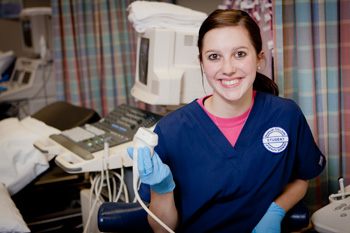
What is the Outlook for Ultrasound Technicians?
Despite the economic downturn that has affected many businesses, the healtcare industry has maintained steady growth over the years. Like most healthcare professions, demand for trained sonographers is high. The occupation is poised for fast growth over the next ten years as the aging baby boom population stays active and the procedure is adopted across more medical facilities. Starting a career in ultrasound technology will ensure a stable future in the workplace where there is often uncertainty.
There really has never been a better time to train as an ultrasound technician. Before starting a sonographer program, it is recommended that prospective students have a good understanding of the admissions requirements and programs available at sonography schools nearby. To determine this, students should seek out and contact schools in their area to request more information.
In addition you should also arrange to tour training facilities and meet with the faculty. From the information received during your visits you will have the information needed to compare the available options and better determine which school best suits your needs. The initial research is very a important step for finding a schools, courses, and teachers that are right for you and your career goals!

While the job of ultrasound technician is a popular job in the health care field, there are still a fairly small number of people doing it. Most estimates say that there are about 75,000 ultrasound techs working at a given time and of those, about half are working in hospitals. By far hospitals are the most common employers for sonographers but doctor’s offices are not far behind. You also might find a job as a sonographer in a lab or in various care centers such as rehab or nursing homes. These jobs are highly competitive and they demand a high level of attention and accuracy.
Most ultrasound technicians work a full time schedule, but they also can be found part time if you branch out to the various community resources. It is possible to provide your services to several places if you develop a reputation and have the contacts in place. Most employees will work a typical full time schedule, however. Nights, weekends and holidays are all usually required as people are sick twenty four hours and day and seven days a week.
How to become an Ultrasound Technician
To become an ultrasound technician, you don’t have to have a specific license as the program is not yet required. That said, it is nearly impossible to find a position if you don’t already have some medical training and certification from an organization like the ARDMS. This stands for American Registry for Diagnostic Medical Sonography and it is basically an exam and work experience combined. Most sonographers take a two or four year college program to become accredited or they learn in-house on the job. If you have a degree in nursing, for example, you might be offered the chance to learn ultrasound technology as well. This is a wonderful way to increase your pay and your resume.
To become an ultrasound technician you have to have really good people skills. It requires people in very uncomfortable situations and often in a great deal of pain to put their trust in you. You have to be able to set their minds at ease and help them relax so that you can get a good reading. You need good coordination both in your hands and in your vision. You need to be in good physical condition as well. You could end up lifting or moving patients around and standing on your feet for very long periods of time. It also helps to have a strong countenance because you will be exposed at some point to death and injury. Extreme injuries can be a deal breaker for many people in the health care industry and sonography is no different. Make certain you are prepared for these types of things going in.
If you are interested in becoming a sonographer, the job outlook is pretty good. Job growth in this line of work is moving at warp speed and there should be plenty of great opportunities on the horizon for well trained ultrasound technicians. With a solid background and associates degree, you can expect to have a career that will pay you well. Advancements are looking brighter as well. If you are willing to specialize in a particular area of ultrasound technology, then you can certainly increase your wage requirements. Other opportunities include management and supervisor roles. These are always needed when a field is growing quickly. More sonographers means more managers to oversee them.
As for salary, the average sonographer earns around 65,000$ per year. That is an average across the United States but it may be higher or lower in particular areas.

State wise Salary Distribution
Job Description
Working as an ultrasound technician is very rewarding but it is also hard work. You spend your days walking a great deal and dealing with new patients repeatedly. You might also:
- Work on the equipment to make certain that it is cleaned, accurate and prepared for the next patient.
- Select the ideal positions and settings for the equipment to best get the results needed.
- Move the patient around to get the proper images.
- Explain what is going to be done to the patient and answer any questions.
- Make judgment calls about whether the images are sufficient to diagnose the problems properly.
- Decide what a particular doctor does and does not want in their images and then provide that.
- Look for image areas that seem different or off and that should be pointed out to the doctor.
- Stay up to date with the latest information and news in the industry.
- Keep certifications up to date.
- Supervise others that are working as sonographers.
- Prepare and organize work schedules.
- Manage a department or group of people.
- Maintain patient information and records.
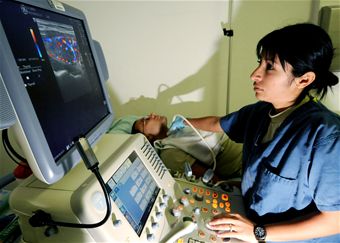
These are only a handful of the duties that one might have to do in an average day as a sonographer. There are literally thousands of duties that could branch off of this rewarding career. If you are interested in this outstanding career, you should start to learn about health care and take courses that are related. Any courses related to biology, chemistry, health care or body systems would be of great use. Also, management courses can help prepare you to oversee entire departments in the future when you have the knowledge to teach others.
Keep in mind that it is no pie job. Ultrasound technology is growing rapidly and it will require that you continue to learn and grow. If you want something challenging and rewarding that will keep you moving for a lifetime, then sonography might just be the job for you.